N1997A Amazon Cargo Plane Overruns Runway at Miami Airport
On Sunday, September 6, 2026, Amazon Air Flight 7598, a Boeing 767 cargo plane operated by 21 Air LLC, overran Runway 30 while landing at Miami International Airport.
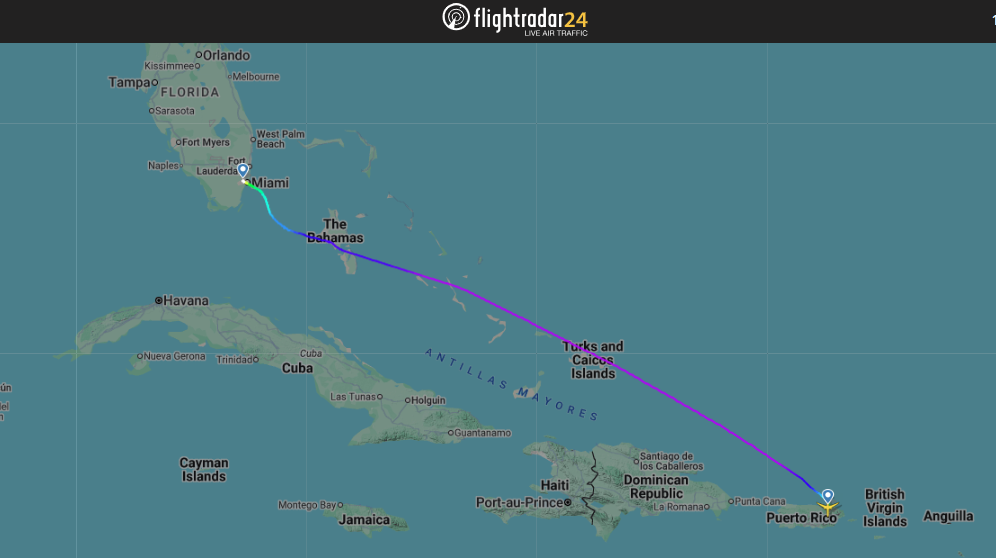
The aircraft, registered as N1997A, was traveling from San Juan, Puerto Rico, to Miami when it continued beyond the runway, crossed the airport perimeter and struck vehicles on the ground. The crash killed five people and injured five others. Both members of the flight crew survived.
The National Transportation Safety Board (NTSB) is investigating the accident and has not determined what caused the runway overrun.
Pilot & Attorney Breaks Down: Liability & Operational Control in 21 Air Flight 7598
In the breakdown below, Joe LoRusso, Ramos Law’s Director of Aviation, an experienced aviation attorney, and an ATP-rated pilot, examines the incident from legal and operational perspectives. Leveraging his firsthand experience in the cockpit and the courtroom, Joe analyzes preliminary flight recorder data, explains the complexities of Amazon’s cargo carrier relationships, and unpacks the critical differences between operational control and civil liability.
Note: This analysis is based on preliminary data, and the official investigation into Flight 7598 remains ongoing. The insights provided do not establish probable cause or final legal responsibility.
Five People Were Killed in a Shuttle Van
The big picture: The five individuals who lost their lives when the Amazon Air Boeing 767 overran the Miami runway were all inside a single shuttle van.
Why it matters: This highlights the severe ground-level danger of runway excursions. The victims were employees of Professional Ocean Service Corp., a contractor that cleans airplanes.
By the numbers:
- The victims: The deceased have been identified as Rolando Aleman Leon (55), Yoel Rodriguez Naranjo (53), Julio C. Pineda (75), Carlos Acosta Fajardo (53), and Javierkys Reyes Quevedo (47).
- The impact: The jet careened roughly 1,300 feet past the runway, completely crushing the front end of the workers’ white van before hitting a separate SUV.
- The survivors: Five other people were injured. The two flight crew members have already been released from the hospital, while two others remain in critical condition and one is stable.
UPDATE — MIA runway overrun
— SLCScanner (@SLCScanner) September 6, 2026
Miami-Dade officials confirm 5 dead and 5 injured after an Amazon Air Boeing 767 cargo jet overran Runway 30, left the airport property, and struck vehicles on a perimeter road.
Flight: Prime Air / 21 Air 7598 (CSB7598 / 2I7598)
Aircraft: Boeing… pic.twitter.com/KioJpm1O09
Preliminary Flight Recorder Data Reveals Details of Miami Amazon Air Crash
The following provides a summary of selected events recorded by the cockpit voice recorder (CVR) during the final minutes of the recording. Times are presented in relation to the end of the CVR recording. Because the investigation is ongoing, the times and descriptions are preliminary and may be revised as additional information becomes available.
This information was sourced from the National Transportation Safety Board
06:02 | A pilot called for flaps to be set to 1 degree. |
04:18 | The flight crew checked in with Miami tower and were cleared to land on runway 30. |
02:53 | A pilot called for flaps to be set to 5 degrees. |
02:37 | The flight crew lowered the landing gear. |
02:14 | A pilot called for flaps to be set to 15 degrees. |
01:42 | A pilot called for flaps to be set to 20 degrees, and the other pilot cautioned they were too fast. The other pilot made additional comments regarding the aircraft’s excessive speed throughout the remainder of the recording. There was not a consistent verbal response to the comments about speed. |
01:23 | Sounds consistent with autopilot disconnect. |
01:12 | Electronic “one thousand” callout. |
01:04 | Electronic “sink rate sink rate” callout. |
00:58 | Electronic “five hundred” callout. |
00:57 | Electronic “sink rate sink rate” callout. |
00:54 | Electronic “one hundred” callout. |
00:50 | Electronic “minimums” callout. |
00:48 | Electronic “too low terrain” callout. Annunciated four times. |
00:41 | A pilot called for flaps to be set to 30 degrees. |
00:40 | Electronic “forty” callout. |
00:39 | Electronic “too low terrain” callout. |
00:36 | Electronic “ten” callout. |
00:31 | Sounds similar to the aircraft touching down. |
00:15 | A pilot called for a go-around. |
00:10 | Sounds similar to the aircraft departing the paved surface. |
00:00 | The CVR recording ended. |
The information below summarizes select events recorded by the FDR during the final minutes of the recording. Times are shown in relation to the end of the FDR recording. The CVR and FDR recordings have not been precisely synchronized, so the times and event descriptions are preliminary and may be revised as the investigation continues.
00:30 | The nose and right main gear touched down at a groundspeed of 158 knots. |
00:23 | The brakes were applied at a groundspeed of 146 knots. |
00:19 | The left main gear touched down at a groundspeed of 134 knots. |
00:15 | Brakes were released at a groundspeed of 120 knots and throttles were increased to a value consistent with go-around thrust. |
00:11 | The throttles were reduced to idle power and the brakes were re-applied. The groundspeed was 117 knots. The throttles remained at idle, and brakes remained applied until the end of the recording. |
00:07 | Recorded lateral, longitudinal, and vertical acceleration values changed markedly; the FDR data indicated a groundspeed of 96 knots. |
00:00 | The FDR recording ended. The final recorded groundspeed was 65 knots. There was no indication in the recorded data that speed brakes or thrust reversers were deployed.. |
What Investigators Know So Far
The NTSB is investigating the September 6, 2026, runway overrun involving 21 Air Flight 7598, a Boeing 767 cargo flight operated on behalf of Amazon Air. Investigators have recovered the aircraft’s flight data recorder and cockpit voice recorder and are analyzing evidence from the aircraft’s final approach and landing.
Why it matters: Preliminary recorder data provides investigators with important information about the final moments of the flight, but it does not establish why the runway overrun occurred. The NTSB has not determined the probable cause of the accident, and its investigation remains ongoing.
Key factors under review include:
- Approach, go-around thrust and braking: Preliminary flight recorder data indicates that the aircraft’s throttles increased in a manner consistent with “go-around thrust” during the landing sequence. Investigators reported that the brakes were subsequently reapplied and remained applied through the end of the recording. Preliminary data also showed no indication that the speed brakes or thrust reversers were deployed. The NTSB is continuing to analyze the aircraft’s performance and the sequence of events.
- Weather and landing conditions: Investigators are examining weather and wind conditions at the time of the accident, along with the aircraft’s approach and landing. The NTSB has not determined whether weather contributed to the runway overrun.
- Runway safety features: Investigators are evaluating airport and runway conditions as part of the broader investigation. Miami International Airport did not have an Engineered Materials Arresting System (EMAS) at the end of Runway 30. EMAS is designed to help slow or stop certain aircraft that overrun a runway. The absence of EMAS should not be interpreted as a cause of the accident unless investigators make such a determination.
- Crew actions and aircraft systems: Information from the flight data recorder, cockpit voice recorder, air traffic control communications and other evidence will help investigators reconstruct the landing sequence and evaluate crew actions and aircraft systems.
- Flight operations: Flight 7598 was operated by 21 Air on behalf of Amazon Air. Investigators are examining the operation of the flight and the roles of the parties involved. The NTSB has not determined whether any company policy, operational practice or other organizational factor contributed to the accident.

N1997A NTSB Media Briefing
NTSB officials provided updates from Miami as investigators began examining the wreckage, flight recorders and other evidence related to the runway excursion. NTSB Chair Jennifer Homendy described the crash site as one of “utter devastation” and emphasized the agency’s focus on determining how and why the accident occurred with the goal of improving aviation safety.
“We are deeply, deeply committed to our duty … to determine how this accident occurred, why it happened with one goal in mind, safety,” Homendy said during the briefing.
The NTSB’s investigation remains ongoing, and preliminary information may change as investigators analyze additional evidence.
Sep 8, 2026: NTSB Media Briefing 2 - Miami, FL Runway excursion accident involving a B-767-300 cargo airplane
Sep 7, 2026:NTSB Media Briefing - Miami, FL Runway excursion accident involving a B-767-300 cargo airplane
Sep 8, 2026: NTSB B-Roll - Miami, Florida, Boeing 767 Cargo Plane Runway Excursion Accident
N1997A Flight Details
- Date: Sunday, September 6, 2026
- Time: c. 13:53 local time
- Aircraft Type: Boeing 767-33AER (BDSF)
- Owner/Operator: Amazon Air, operated by 21 Air
- Registration: N1997A
- MSN: 27310/545
- Year of Manufacture: 1994
- Engine Model: GE CF6-80C2B6F
- Category: Accident
- Nature of Flight: Cargo
- Phase of Flight: Landing
- Departure Airport: San Juan-Luis Muñoz Marín International Airport (SJU/TJSJ)
- Destination Airport: Miami International Airport (MIA/KMIA), Miami, FL, USA
- Crash Location: Miami International Airport (MIA/KMIA), Miami, FL, USA
- Occupants: 2
- Onboard Fatalities: 0
- Ground Fatalities: 5
- Aircraft Damage: Substantial
PAC 750XL N221BN Crash FAQ's
What happened to the Amazon Air plane in Miami?
An Amazon Air cargo flight operated by 21 Air overran Runway 30 while landing at Miami International Airport on September 6, 2026. The Boeing 767 continued beyond the runway, crossed the airport perimeter and struck vehicles on the ground.
How many people died in the Amazon Air plane crash?
Five people on the ground were killed in the crash. The two crew members aboard the Boeing 767 survived.
How many people were injured in the Miami Amazon Air crash?
Five people were injured in the crash, including the two flight crew members, who were treated and released from the hospital. Three other individuals were hospitalized, with some initially reported to be in critical condition.
What type of plane was involved in the Amazon Air crash?
The aircraft was a Boeing 767-33AER cargo plane manufactured in 1994. It was registered as N1997A and operated by 21 Air on behalf of Amazon Air.
Where did the Amazon Air plane crash in Miami?
The aircraft overran Runway 30 at Miami International Airport and traveled approximately 1,300 feet beyond the end of the runway. It crossed the airport perimeter and came to a stop in a grassy area near a parking lot.
What caused the Amazon Air plane to overrun the runway?
The cause has not yet been determined. Investigators are examining factors including the aircraft’s approach and landing, weather and wind conditions, aircraft systems, crew actions, runway conditions and airport operations.
Did weather contribute to the Amazon Air crash?
Thunderstorms and gusty winds were present in the Miami area when the aircraft landed. However, the NTSB has not determined whether weather contributed to the accident. Weather conditions will be part of the ongoing investigation.
Who is investigating the Amazon Air plane crash?
The National Transportation Safety Board (NTSB) is leading the investigation. Investigators are examining the aircraft, flight data, cockpit communications, weather, air traffic control information, crew actions and other factors to determine what happened.
About Joseph LoRusso, Esq.
Joseph LoRusso is the Director of Aviation at Ramos Law and a nationally recognized aviation attorney with more than 20 years of hands-on flight experience. A professional flight instructor and Airline Transport Pilot, Joseph brings a rare dual perspective to every case—combining deep technical aviation knowledge with strategic legal advocacy for pilots, operators and crash victims.
Joseph holds multiple type ratings, including Learjet, Citation, Phenom 300E, Gulfstream GV (SIC), and L382 (C130) (SIC) and has flown complex missions as an atmospheric research pilot, including NASA’s 2018 CAMP2EX global campaign. Whether analyzing aircraft performance, regulatory compliance or crash causation, Joe approaches every case with precision, credibility and an unwavering commitment to achieving results for his clients.
Contact Ramos Law
Ramos Law’s Aviation Division focuses exclusively on aviation-related matters, including aircraft crashes, FAA enforcement actions, certificate issues and complex regulatory and operational cases. The practice is led by attorney Joseph LoRusso, a licensed pilot with real-world flight experience and deep knowledge of aviation regulations.
Our team understands the technical, operational and legal issues unique to aviation incidents. If you or your family has been affected by an aviation crash or regulatory matter, contact Ramos Law to speak with an aviation attorney who understands the industry.
Disclaimer: This article is intended for informational purposes and is based on preliminary reports and publicly available sources. Aviation accident investigations are conducted by the FAA and NTSB, and the official findings and probable cause will be determined by those agencies following a full investigation.

Experts in Aviation Law
Aircraft Crashes
Pilot Certificate Defense
FAA Medical Denial
FAA DUI Reporting
Civil Penalties
NTSB Appeals
And More!