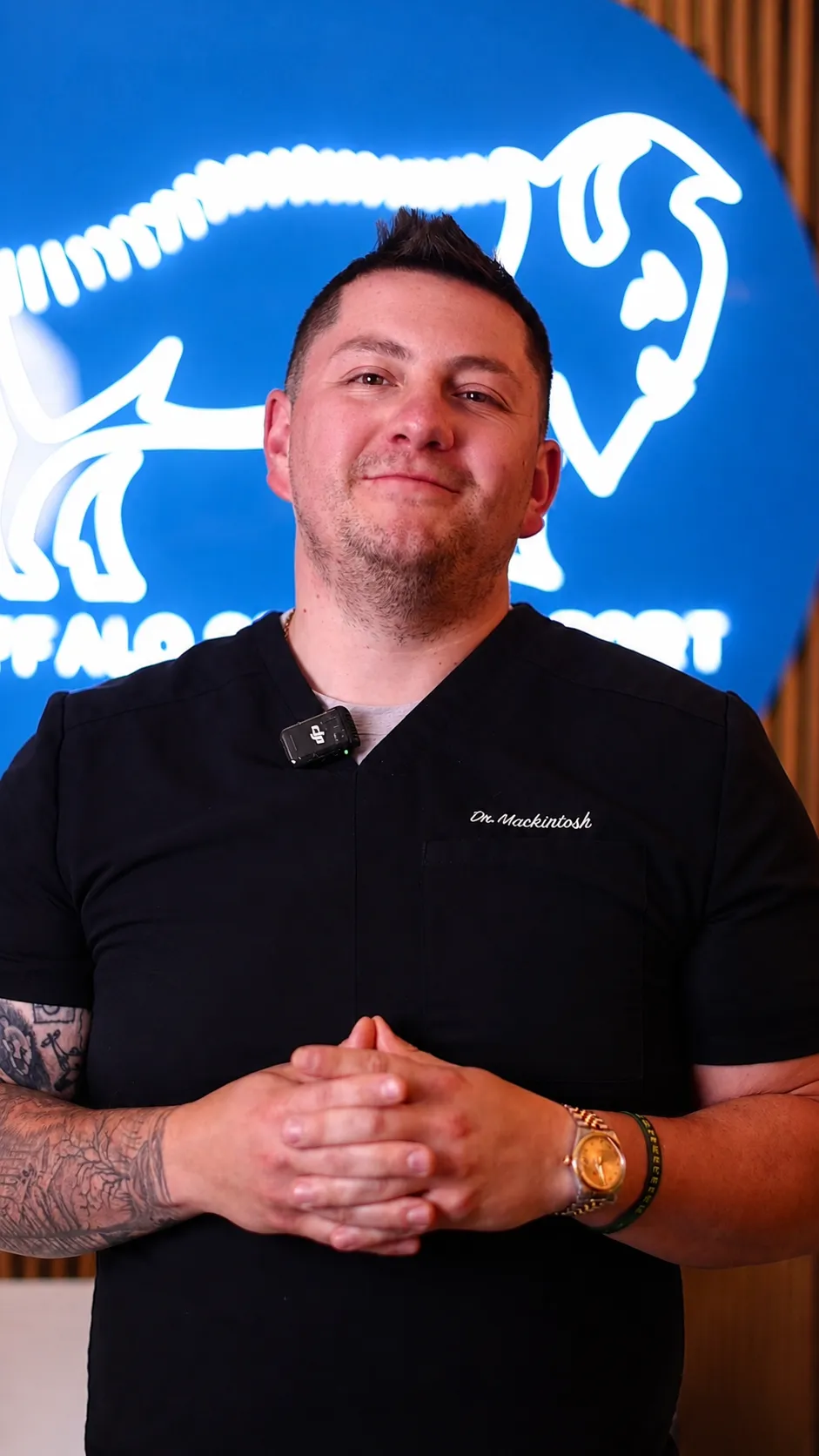
Difference Makers: Healing with purpose, science and a patient-first approach
On this episode of the Difference Makers podcast, host Dr. Jim Hoven sits down with Dr. Macaulay Mackintosh, founder of Buffalo Spine & Sport, to discuss his journey into chiropractic care and injury recovery. After losing his father to brain cancer at 17 and experiencing his own sports injury, Dr. Mac found purpose in helping others heal. He eventually returned to Colorado and launched his practice in a 100-square-foot room with an iPhone and a portable treatment table, building it around personalized care and clinical knowledge.
Dr. Mac explains how focused shockwave therapy can fit into injury treatment, emphasizing careful assessment, patient tolerance and an understanding of the science behind the technology. He also discusses laser therapy, rehabilitation, exercise and nutrition as parts of a broader recovery approach. During the episode, Dr. Jim experiences shockwave therapy firsthand, prompting a conversation about immediate relief versus complete healing and why individualized treatment and patient education matter.
Key Insights
- A personal experience can shape a professional purpose: The loss of his father and his own sports injury helped influence Dr. Mac’s path toward a career focused on helping people heal.
- Build your own path when the existing system falls short: Dr. Mac opened his practice because he wanted greater flexibility to tailor treatment to individual patients rather than letting insurance limitations dictate their care.
- Innovation requires education: New technology is only as useful as the provider’s understanding of its underlying science, appropriate applications and potential risks.
- Recovery is not one-size-fits-all: Acute injuries, chronic pain and individual patient sensitivities call for different treatment approaches, with adjustments based on how each person responds.
- The right treatment starts with the right assessment: A treatment that works for one condition or patient may not be appropriate for another. Providers must understand what they are treating before choosing how to treat it.
- Feeling better does not always mean healing is complete: Dr. Mac emphasizes the importance of patient education, following an appropriate treatment plan and avoiding a premature return to activities that could aggravate an injury.
- Excellence means looking at the whole person: Treatment can extend beyond an in-office procedure to include rehabilitation, movement, exercise, nutrition and other factors that influence recovery.