N1560E Plane Crash in Hudson River
Breaking: Cessna 172N N1560E Makes Emergency Landing in
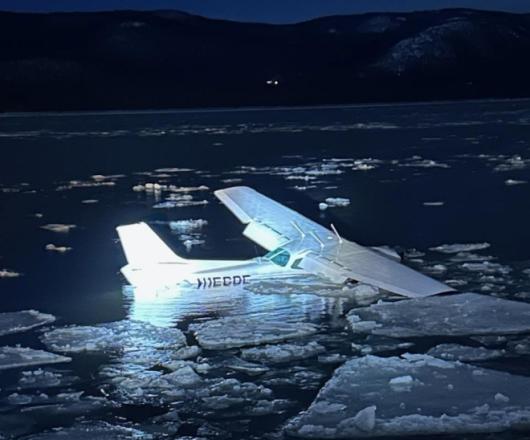
On the evening of March 2, 2026, a small training aircraft was forced to make an emergency water landing in the Hudson River after reporting engine trouble while flying north of New York City.
According to early reports, a Cessna 172N Skyhawk (registration N1560E) piloted by Liam D’Arcy, 31 (a flight instructor) ditched in the river shortly after 8:00 p.m. roughly 2 miles south of the Newburgh–Beacon Bridge, near the shoreline of the City of Newburgh (roughly 60 miles north of Manhattan). Two people were onboard—D’Arcy and a 17-year-old student pilot. Both survived the incident.
The aircraft reportedly departed Long Island MacArthur Airport earlier that evening and was conducting what appears to have been a night training flight when the emergency unfolded.
Federal investigators from the Federal Aviation Administration (FAA) and the National Transportation Safety Board (NTSB) are now investigating the incident.
N1560E Hudson River Aircraft Crash Aviation Analysis
Aviation Attorney & Pilot Weighs Analysis
In a technical breakdown of the incident, Ramos Law’s Director of Aviation Joseph LoRusso explained the background of the aircraft and what may have been happening during the flight.
“The Hudson River is no stranger to aviation miracles,” says LoRusso. “But on the night of March 2, 2026, history threatened to repeat itself—this time sixty miles north of New York City.
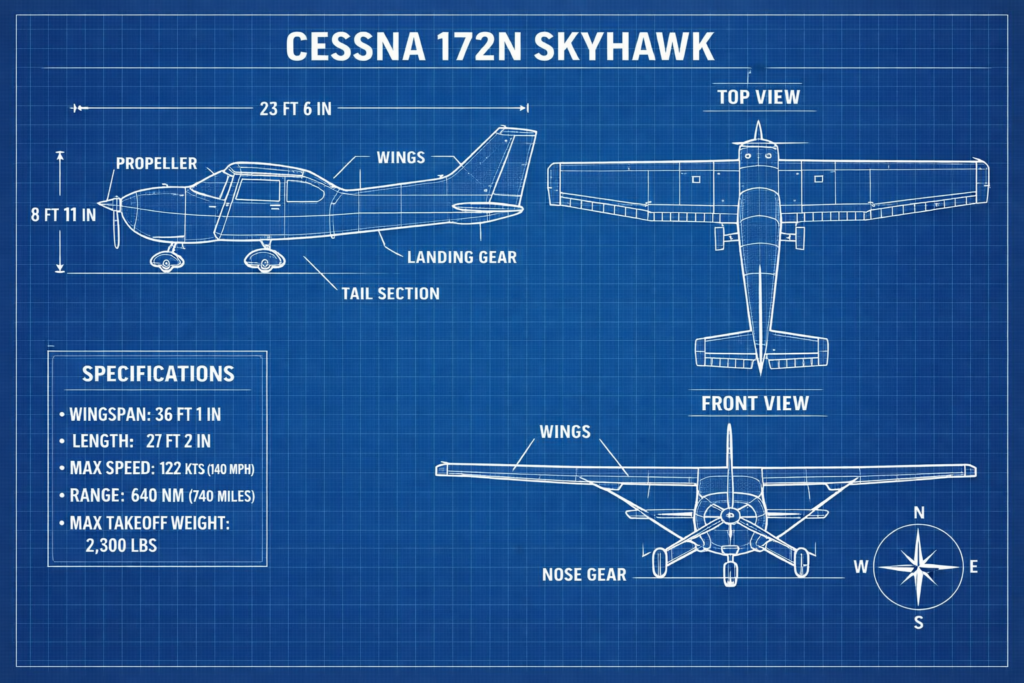
The aircraft involved was a Cessna 172N Skyhawk, one of the most widely used training aircraft in the world.
“The 172N is the workhorse of the flight instruction world,” LoRusso explains. “As a flight instructor, I can confirm it’s one of the most common airplanes used for student training.”
The aircraft was reportedly registered to American Airman Inc., a flight school based at Long Island MacArthur Airport.
What Happened During the Flight?
Flight tracking information suggests the aircraft departed Long Island MacArthur Airport at approximately 6:55 p.m. with two people onboard: a certified flight instructor and a student pilot.
The aircraft was flying toward the Hudson River corridor, a well-known general aviation route that allows pilots to navigate the complex New York airspace while enjoying views of the river and surrounding landscape.
However, LoRusso believes the flight likely had a training purpose rather than sightseeing.
“Even though that corridor offers amazing views, this appears to have been an instructional flight,” he says.
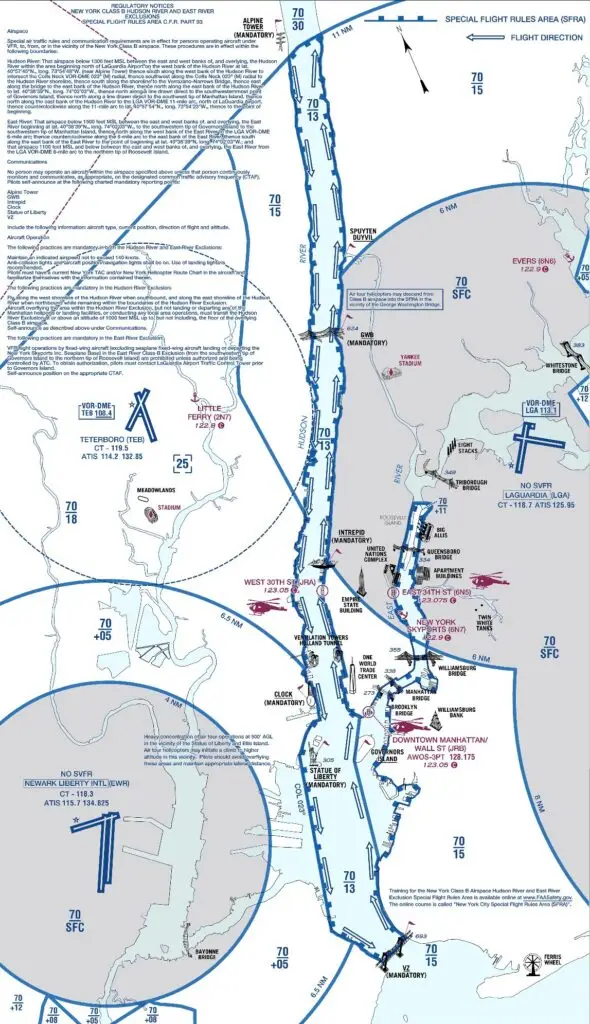
Map of the Hudson Corridor
The aircraft then continued northwest toward Stewart International Airport, a towered airport located near West Point.
The route itself aligns closely with required night training tasks for student pilots working toward a private pilot certificate.
LoRusso explains:
“Student pilots working toward a private pilot rating must complete night training, including a night cross-country flight and at least ten night landings to a full stop, several of which must be at a towered airport.”
Stewart International Airport sits approximately 60 nautical miles from Islip in Long Island, meeting the FAA’s minimum cross-country distance requirement.
Engine Trouble and a Critical Decision
According to early reports, after completing one landing at Stewart, the aircraft departed the airport area and began heading south again.
Shortly afterward, the crew reportedly noticed a loss of oil pressure and rough engine power
The crew attempted to turn back toward Stewart International Airport, but the engine reportedly continued to deteriorate.
With insufficient power to reach the airport, the instructor made the decision to land on an ice-covered section of the Hudson River
“At that point the instructor reported they were going into the Hudson.”
A Dangerous Water Landing
Unlike commercial airliners, most small training aircraft aren’t as equipped for water landings. In fact, ditching a fixed-gear aircraft like the Cessna 172 can be extremely hazardous.
“Ditching a fixed-gear aircraft is incredibly dangerous,” says LoRusso. “If the landing gear catches the water at the wrong angle, the airplane can flip almost instantly.”
Conditions on the Hudson River that night also added to the risk. The water temperature was near freezing and floating ice had formed along parts of the river surface.
Despite those challenges, the aircraft successfully touched down on the water just south of the Newburgh–Beacon Bridge.
After the landing, both occupants exited the aircraft and made their way toward shore.
“After touching down, the instructor and student were able to move away from the airplane and ultimately swim the last portion to shore,” says LoRusso.
Early reports indicate both individuals were taken to a hospital for evaluation and treated for hypothermia and minor injuries before being released
Aviation Skill Under Pressure
While the investigation is only beginning, LoRusso emphasizes the professionalism displayed by the instructor and student in managing the emergency.
A Cessna 172 has a glide ratio of roughly 9:1, meaning that from 3,000 feet a pilot can glide about five nautical miles. Once the engine began losing oil pressure and power, the crew likely had only minutes to reach a safe landing area.
“Emergency situations are not easy. As pilots we train for them routinely but training and the real thing are two different animals. The composure shown in turning back after low oil pressure, then making the decision to ditch the airplane safely is unbelievably impressive work.”
What Investigators Will Examine
The investigation will involve both the Federal Aviation Administration and the National Transportation Safety Board, each playing a distinct role.
LoRusso explains that only the NTSB has congressional authority to determine the cause of an aircraft accident.
“The NTSB is the only entity that has congressional authority to investigate aircraft crashes in the United States.”
However, the NTSB often delegates on-scene evidence collection to the FAA.
Investigators will likely examine:
- Engine oil pressure systems and powerplant condition
- Aircraft maintenance records and logbooks
- Pilot training and certification records
- Flight path and air traffic control communications
- Aircraft recovery and engine teardown analysis
Because the incident involved a potential engine failure, the aircraft’s Lycoming O-320 engine may receive particular scrutiny.
“Given that the case revolves around a loss of oil pressure, investigators will likely retain the engine for detailed examination,” says LoRusso.
Investigation Timeline
In most aviation accidents, investigators release two major reports. The first is a preliminary report, usually issued within several weeks, which contains only factual information about the event. A second, more comprehensive final report may take up to two years and will include the NTSB’s official probable cause determination.
“The preliminary report will likely come out in a week or two and will be purely factual,” LoRusso says. “The final report that addresses causation can take years.”
A Remarkable Outcome
While investigators will ultimately determine what caused the aircraft’s engine failure, one fact is already clear: both occupants survived a situation that could easily have ended very differently.
Emergency landings on water (especially at night and in near-freezing conditions) are among the most dangerous scenarios a pilot can face. Small aircraft like the Cessna 172N Skyhawk have fixed landing gear that can increase the risk of the airplane flipping on contact with the surface. Add darkness, cold water temperatures and floating ice on the Hudson River and the margin for error becomes extremely small.
Yet despite those challenges, the instructor and student managed to maintain control of the aircraft long enough to execute a controlled ditching. That outcome speaks to the value of aviation training and preparation. Pilots regularly practice emergency procedures (engine failures, forced landings and decision-making under pressure) precisely for situations like this one. When a real emergency occurs, that training can make the difference between chaos and a controlled response.

In this case, the crew appears to have followed key priorities: recognizing the engine problem early, attempting to return to a nearby airport and ultimately choosing the safest available landing option when reaching the runway was no longer possible. Those decisions likely helped ensure the aircraft touched down in a controlled manner rather than resulting in a loss of control accident.
“Both the instructor and the student should feel incredibly proud of how they handled that emergency,” says LoRusso. “Training prepares pilots for moments like this, but executing under real pressure is never easy. Their composure and decision-making likely saved their lives.”
While the investigation led by the NTSB will focus on what caused the engine to lose oil pressure, the outcome already highlights something aviation professionals know well: preparation, discipline and calm decision-making are often the most powerful safety tools a pilot has.
A Remarkable Outcome
Ramos Law will continue to follow updates from federal authorities as this investigation unfolds.
If you or a loved one have questions about aviation accident investigations, aircraft liability or your legal rights following an aviation incident, the aviation team at Ramos Law is available for a confidential consultation.
Disclaimer: All reported details are preliminary and based on witness accounts or publicly available information. Official findings will be determined by the investigating authority, which may include the FAA with participation from the NTSB.
N1560E Flight Details
- Aircraft: Cessna 172N Skyhawk
- Registration: N1560E
- Date: March 2, 2026
- Location: Hudson River near Newburgh, New York
- Occupants: 2
- Injuries: None reported
- Departure Airport: Long Island MacArthur Airport (ISP/KISP)
- Destination Airport: Stewart International Airport (SWF/KSWF)
- Phase of Flight: Training / En route
Recapping: The Miracle on the Hudson
One of the most famous aviation emergencies in modern history occurred on January 15, 2009, when US Airways Flight 1549 was forced to make an emergency landing in the Hudson River shortly after takeoff from LaGuardia Airport in New York City.
The aircraft, an Airbus A320 operated by US Airways, struck a flock of geese just minutes after departure, causing both engines to lose power. With the aircraft rapidly losing altitude and no runway within reach, Captain Chesley “Sully” Sullenberger and First Officer Jeffrey Skiles were forced to make a critical decision.
Rather than attempting to return to LaGuardia or divert to another airport, Captain Sullenberger chose to ditch the aircraft in the Hudson River. The jet glided powerless over Manhattan before touching down on the water near Midtown.
Despite the dramatic circumstances, all 155 people on board (150 passengers and five crew members) survived. Ferries and rescue boats quickly converged on the aircraft and safely evacuated everyone from the partially submerged plane.
The event quickly became known as the “Miracle on the Hudson.” Aviation experts widely credit the outcome to the crew’s training, rapid decision-making and precise aircraft control under extreme pressure. The successful ditching of a large commercial jetliner was unprecedented in modern U.S. aviation history and became a landmark example of how training and experience can save lives during a catastrophic emergency.
The story later gained worldwide attention and was dramatized in the 2016 film Sully, which portrayed the events leading up to the emergency landing and the investigation that followed.
The March 2026 Hudson River incident involving a small training aircraft inevitably drew comparisons to this historic event. While the aircraft involved (a much smaller Cessna 172N Skyhawk) and the circumstances were very different, both cases highlight the same core principle of aviation safety: preparation and composure can make the difference between tragedy and survival.
Hudson River Plane Incident Frequently Asked Questions
What caused the Hudson River plane ditching?
The cause is still under investigation by the National Transportation Safety Board. Investigators will examine engine performance, maintenance records, pilot actions and environmental conditions. The crew reportedly noticed a loss of oil pressure and rough engine power
What type of aircraft was involved?
The aircraft was a Cessna 172N Skyhawk, one of the most common single-engine training airplanes used worldwide.
Was this a commercial flight?
No. Early reports indicate the aircraft was conducting a training flight operated by a flight school.
Did anyone die in the crash?
No fatalities have been reported. Both the flight instructor and the student pilot survived the emergency landing.
How long will the investigation take?
The NTSB usually releases a preliminary report within several weeks, while the final report determining probable cause may take up to two years.
About Joseph LoRusso, JD
Joseph LoRusso is the Director of Aviation at Ramos Law and a nationally recognized aviation attorney with more than 20 years of hands-on flight experience. A former professional flight instructor and Airline Transport Pilot, Joseph brings a rare dual perspective to every case—combining deep technical aviation knowledge with strategic legal advocacy for pilots, operators and crash victims.
Joseph holds multiple type ratings, including Learjet, Citation, Phenom 300E and Gulfstream GV (SIC) and has flown complex missions as an atmospheric research pilot, including NASA’s 2018 CAMP2EX global campaign. Whether analyzing aircraft performance, regulatory compliance or crash causation, Joe approaches every case with precision, credibility and an unwavering commitment to achieving results for his clients.

Experts in Aviation Law
Aircraft Crashes
Pilot Certificate Defense
FAA Medical Denial
FAA DUI Reporting
Civil Penalties
NTSB Appeals
And More!


Contacr Ramos Law
Ramos Law’s Aviation Division focuses exclusively on aviation-related matters, including aircraft crashes, FAA enforcement actions, certificate issues and complex regulatory and operational cases. The practice is led by attorney Joseph LoRusso, a licensed pilot with real-world flight experience and deep knowledge of aviation regulations.
Our team understands the technical, operational and legal issues unique to aviation incidents. If you or your family has been affected by an aviation crash or regulatory matter, contact Ramos Law to speak with an aviation attorney who understands the industry.