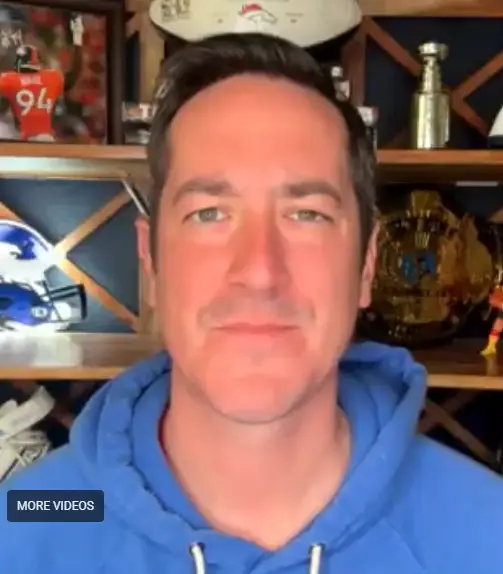
Injury Insights: Medical Doctor Explains Lindsey Vonn's ACL Injury
Olympic skiing legend Lindsey Vonn stunned fans by competing in a downhill event with a ruptured ACL. In this week’s Injury Insights, Dr. Joseph Ramos explains how that’s even possible. The ACL (anterior cruciate ligament) connects the femur to the tibia and prevents the shinbone from sliding forward—an essential stabilizer in a high-speed sport like downhill skiing. However, elite athletes like Vonn possess extraordinary quadriceps and hamstring strength, which can help compensate for ligament instability. Dr. Ramos also points to modern carbon fiber knee bracing technology, which can closely mimic the function of the torn ligament and provide additional structural support during competition.
As for pain, Dr. Ramos notes that ACL tears themselves are often less painful than people expect. The discomfort typically comes from swelling inside the knee joint rather than from the ligament, which has limited blood flow and nerve supply. Looking ahead, recovery will be significant. Modern ACL reconstruction often uses a cadaver graft that is doubled for added strength, but rehabilitation alone can take six to twelve months. With reports of an associated leg fracture and the natural muscle atrophy that follows time off the leg (particularly in an athlete in her 40s) Vonn faces a long road back.
Key Insights
- Skiing on a Prayer: Lindsey Vonn competed in a downhill event despite a ruptured ACL, the key ligament that keeps the tibia from sliding forward under the femur and stabilizes the knee.
- Ligament of Legends: The ACL is essential for high-speed, high-impact sports like downhill skiing, which makes her ability to race on a torn ligament especially extraordinary.
- Muscle Over Matter: Vonn’s elite quadriceps and hamstring strength helped stabilize her knee, compensating for the damaged ligament in ways most athletes simply cannot.
- Brace for Impact: Modern carbon fiber knee bracing technology played a pivotal role, effectively mimicking the ACL’s function and reinforcing the joint during competition.
- The Swell Story: ACL tears themselves are often less painful than expected; most of the discomfort comes from swelling and fluid pressure inside the joint rather than the ligament.
- Graft Expectations: Standard ACL reconstruction typically uses a doubled cadaver graft to create a strong new ligament, but even with surgical success, rehabilitation usually takes 6–12 months.
- Downhill Battle: Because Vonn also reportedly broke her leg and is in her 40s, her recovery could take about a year, especially given muscle atrophy that occurs quickly after an ACL tear.